If you’re new to card making or paper crafting, there’s a good chance you’ve typed “embossing machine” into Google and ended up completely confused. You’ll see embossing folders, embossing powders, die cutting machines… and suddenly it feels like you need an engineering degree just to make a birthday card.
Here’s the good news: you do not need a separate embossing machine.
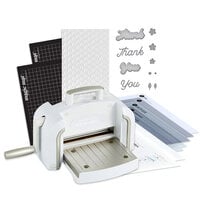
In fact, most modern die cutting machines already emboss beautifully. If you own a Sizzix Big Shot, Spellbinders Platinum, Intri-Cut, Gemini, Anna Griffin Empress, Switch, or another manual or electronic die cutting machine, you already have the machine you need. The magic comes from the embossing folder and the correct sandwich of plates.
So let’s clear up the confusion once and for all and walk through everything you need to know about embossing folders, embossing machines, 3D embossing, combination emboss-and-cut folders, and even how to emboss without a machine at all.
What Is Embossing?
Embossing is a technique that creates a raised or recessed design on paper. It adds texture, depth, and dimension to your projects — and honestly, it’s one of those techniques that makes people stop and say, “Wait… how did you DO that?”
There are two main kinds of embossing in paper crafting:
- Dry Embossing – created with pressure using an embossing folder and machine
- Heat Embossing – created with embossing ink, embossing powder, and a heat tool
For this article, we’re focusing mostly on dry embossing — the kind that uses embossing folders and die cutting machines. If you want to learn more about heat embossing, you can read this article.


Do You Need a Separate Embossing Machine?
No! Not anymore.
Years ago, there actually were machines made only for embossing. Some longtime crafters might remember compact machines designed specifically for running embossing folders through rollers to create texture.
But crafting tools evolved quickly, and manufacturers realized something important:
Why make people buy two machines when one machine can do both?
That’s why today’s die cutting machines are designed to handle both die cutting and embossing.
So when beginners search for “embossing machine,” what they’re usually really looking for is:
- a die cutting machine
- an embossing folder
- the correct plate sandwich (your specific die cut machine will have instructions or you can find a sandwich guide in this article)
And that’s actually great news because it saves money, saves craft room space, and opens up way more creative possibilities.
How Does Embossing Work?
Embossing folders work by pressing paper between raised and recessed designs under pressure.
Think of an embossing folder like a textured mold for your paper.
You place your cardstock inside the folder, run it through your die cutting machine, and the rollers press the design into the paper fibers.
When it comes out the other side, your flat cardstock suddenly has texture and dimension.
It’s one of the easiest ways to instantly make handmade cards, scrapbook layouts, tags, journals, and mixed media projects look polished and professional. See how easy it is by watching the video below to see all the creative ways you can use an embossing folder.
What Is an Embossing Folder?
An embossing folder is a hinged plastic folder with a design built into it.
One side contains the raised pattern, while the other side contains the recessed impression. When pressure is applied, the paper is molded between the two surfaces.
Embossing folders come in countless designs:
There’s honestly an embossing folder for nearly every style and season imaginable.

Types of Embossing Folders
Standard (2D) Embossing Folders
Standard embossing folders create a single-level or 2D raised impression.
These are perfect for:
- backgrounds
- subtle texture
- layered card fronts
- quick beginner projects
They’re also usually thinner than specialty folders, which means they work in almost every die cutting machine with minimal adjustments.
3D Embossing Folders
3D embossing folders take things to a completely different level.
Instead of creating one uniform depth, they use multiple levels of dimension to create highly detailed designs with dramatic texture.
The difference is honestly stunning.
Flowers look sculpted. Leaves look realistic. Brick walls suddenly have actual depth and shadow. It’s one of those techniques that photographs beautifully but somehow looks even better in person.
Because 3D folders are thicker, they usually require a slightly different sandwich configuration in your machine.
And yes — this is where many beginners panic.
But don’t worry. Every machine brand provides sandwich instructions, and once you do it once or twice, it becomes second nature.
How to Emboss With a Die Cutting Machine
Embossing with a die cutting machine is surprisingly simple. It functions the same way you die cut something, the biggest change is the “sandwich.”
Your machine uses layered plates to create pressure. The exact combination depends on:
- your machine brand
- the type of embossing folder
- whether it’s standard or 3D
A Basic Embossing Sandwich Usually Looks Like:
- platform/base plate
- cutting plate
- embossing folder with cardstock inside
- top cutting plate
Then you simply roll it through the machine.
That’s it.
Your paper comes out embossed and textured. If you need help troubleshooting how to use your die cutting machine for embossing, you can read this troubleshooting guide.
Go ahead and watch these videos from crafters using embossing folders for scrapbook layouts and cards!
Pro Tips for Better Embossing
Lightly Mist Your Cardstock
If your cardstock cracks while embossing, especially with intricate 3D folders, lightly mist it with water first.
This softens the fibers and helps them stretch instead of split.
Use Heavier Cardstock
80 lb to 110 lb cardstock usually embosses beautifully.
Thin paper can work, but thicker cardstock tends to hold the impression better.
For the best results, use Scrapbook.com's colored cardstock. The solid core cardstock has the same color throughout the paper, whereas white core cardstock has color only on the surface with a white center. When folded, torn, or cut, the edges remain the same color as the surface. If cracking does occur, it won't be noticeable with solid core cardstock.
Try Inking the Folder
Want even more drama?
Lightly swipe ink onto one side of the embossing folder before running it through the machine.
The raised areas pick up color while the recessed areas stay lighter, creating incredible contrast and detail.
Can You Emboss Without a Machine?
Actually, yes.
Before die cutting machines became mainstream, many crafters embossed by hand.
You can still do this today using:
- stencils
- a stylus tool
- a soft embossing mat
Place the stencil over your cardstock and trace the design with the stylus while applying pressure.
The paper stretches into the open areas of the stencil and creates a raised design.
It’s slower than machine embossing, but it works beautifully for small accents and detailed elements.
What About Heat Embossing?
Heat embossing is completely different from dry embossing, but many beginners confuse the two because they share the same name.
Heat embossing uses:
You stamp an image with sticky embossing ink, sprinkle powder over it, and then melt the powder with heat to create a raised glossy effect.
It’s amazing for:
- sentiments
- metallic details
- watercolor resist techniques
- elegant outlines
- holiday cards
Once you start heat embossing, there’s a very real chance you’ll begin embossing literally everything. Read this article to learn how to heat emboss.

Why Embossing Makes Handmade Cards Look Professional
Texture changes everything.
A flat card can be beautiful, but embossing adds movement, shadow, dimension, and tactile detail that instantly elevates a project.
Even the simplest cardstock suddenly feels intentional and finished.
That’s why embossing is one of the easiest techniques for beginners to learn while still getting impressive results immediately. Check out some examples below!


So... Do You Need an Embossing Machine?
You'll like this answer... No!
If you already own a die cutting machine, you already own an embossing machine.
All you really need are embossing folders and the correct plate sandwich for your machine.
And once you start adding texture and dimension to your projects, you’ll quickly understand why embossing has stayed one of the most loved techniques in paper crafting for decades.
Because there’s just something magical about watching plain cardstock come out the other side looking beautifully detailed, textured, and completely transformed.
Keep Learning
Want to keep learning about heat embossing and sandwiches for your die cut machine?
Heat Embossing 101: How To Use Embossing Powder And Heat Embossing Results
Die Cutting Troubleshooting: Fix Common Sandwich, Shim & Embossing Problems